
SpaceX’s orbital AI ambitions could choke Earth in pollution
A new study estimates that the company’s plans to launch a million orbital data centers could increase Earth’s upper atmospheric pollution by more than a 100-fold
This past weekend, millions of people watched in awe as a colossal rocket did what was once considered impossible: launch into orbit, deploy a batch of satellites and then return to its launchpad to be precision-plucked from midair and readied for another flight. The feat was especially impressive because the vehicle involved was Starship—SpaceX’s megarocket, the largest ever built. The rocket is meant to be fully reusable and is central to the company’s push for orbital dominance.
But now that the celebratory cheers have faded and Starship is one giant leap closer to full operations, scientists are warning that SpaceX’s plans demand deeper scrutiny. The firm’s proposal to put a million data centers into orbit has sparked breathless media coverage and boosted SpaceX’s stock price. Far less attention has been paid, however, to the possible effects on Earth’s upper atmosphere caused by SpaceX’s agenda, which, a new study estimates, could include an increase in some forms of pollution by more than 100-fold.
The study’s authors say that the company has disclosed too little information about its plans to be able to determine the full extent of the potential harm—and that more oversight is needed before it’s too late.
On supporting science journalism
If you’re enjoying this article, consider supporting our award-winning journalism by subscribing. By purchasing a subscription you are helping to ensure the future of impactful stories about the discoveries and ideas shaping our world today.
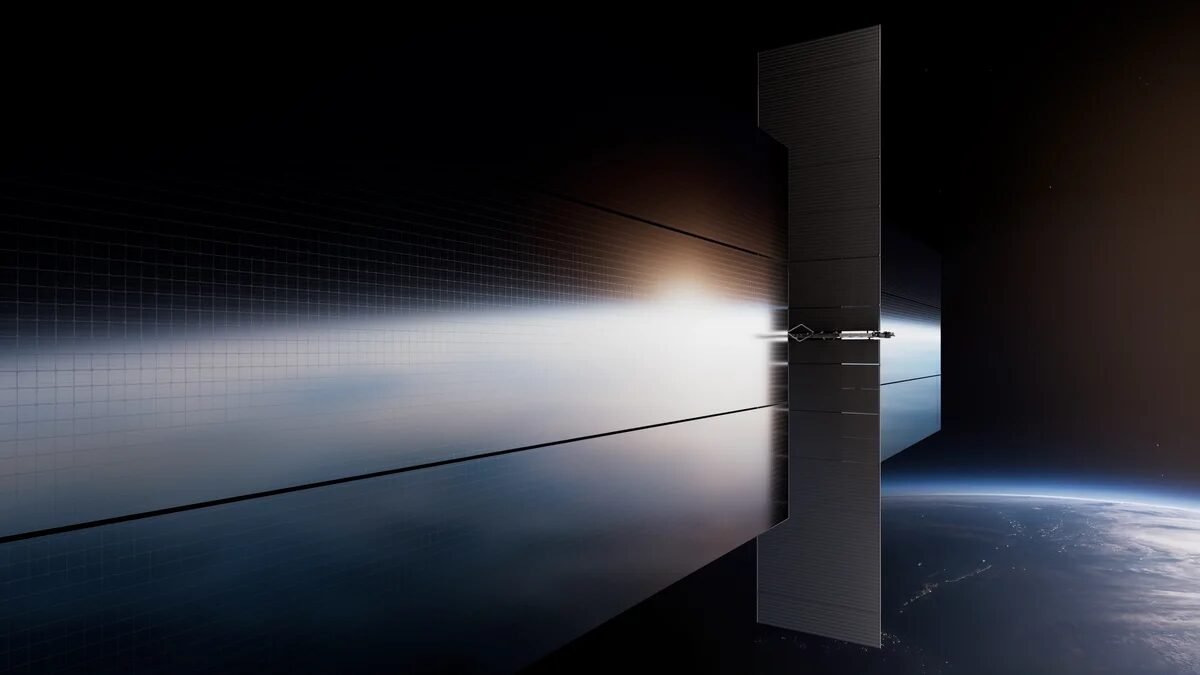
In January 2026 SpaceX asked the U.S. Federal Communications Commission (FCC) for permission to launch one million orbital data-center satellites—an unprecedented megaconstellation that would overshadow anything currently in orbit. No environmental assessment of the proposal has been made public, and one may never be required by the FCC.
In September the regulator exempted satellite megaconstellation filings from environmental review despite growing concerns about the atmospheric pollution released by launching, maintaining and eventually disposing of vast numbers of spacecraft.
Previous studies have already warned that megaconstellations could introduce substantial amounts of pollutants into the upper atmosphere, potentially warming parts of the atmosphere and eroding Earth’s protective ozone layer. Unlike emissions from cars and factories, the lofty pollution from rocket flights and reentering satellites can linger for years, allowing their effects to accumulate.
“It’s one thing to make a data center. It’s another thing to make a data center and then put it into orbit,” says Aaron Boley, of the University of British Columbia, who studies the environmental impacts of space activities and wasn’t involved in the new analysis.
Now Eloise Marais and Connor Barker, both at University College London, have attempted to quantify the consequences of SpaceX’s grand plan. Their analysis, released as a preprint and awaiting peer review for publication in the American Chemical Society’s journal Earth and Space Chemistry, estimates that the megaconstellation could increase total emissions from rocket launches by more than 150 times compared with 2025 levels. It could also generate between 70 and 150 times more nitrogen oxides from spacecraft returning to Earth. And this is the potential result of only one megaconstellation project—other nations and companies are pursuing ambitious projects of their own with broadly similar aims, although, for now, SpaceX remains far ahead of its competitors.
To reach those figures, the researchers assumed SpaceX would use its planned Starship Block 4 rocket, which is expected to carry at least 200 metric tons into orbit per launch. The company’s data center proposal would therefore need at least 5000 launches a year—or around 14 every day. By comparison, only about 330 orbital rocket launches took place worldwide in 2025.
Yet the researchers had to make numerous assumptions to produce these estimates because SpaceX has failed to disclose some basic information about its rockets and satellites.
“It became apparent [early on in our research] that the kind of information that’s needed isn’t there,” Marais says.
One major uncertainty concerns nitrogen oxides, gases that can trigger ozone-destroying chemical reactions, weakening the atmosphere’s protection against harmful ultraviolet radiation. As spacecraft plunge toward Earth at hypersonic speeds, the surrounding air becomes so hot that nitrogen and oxygen molecules react to produce these gases.
How much forms depends strongly on the speed of reentry. For example, Starship’s reusable “Super Heavy” booster is expected to return to Earth much more slowly than the Starship orbiter itself and thus to produce less nitrogen oxide. But with few experimental measurements available, the researchers relied on estimates derived from studies of NASA’s space shuttles to calculate a range of 233,000 to 507,000 metric tons annually, comparable to the annual emissions of some European countries.
The amount of material deposited in the atmosphere by dying satellites is another major unknown. SpaceX plans to move 80 percent of its satellites into higher “graveyard orbits.” If the rest burns up in the atmosphere, the researchers estimate that around 200,000 metric tons of spacecraft material would be vaporized in the upper atmosphere each year—more than 200 times the amount from satellites and other objects in 2024.
As these materials burn up, metals such as aluminum are released to form tiny particles that can supercharge ozone-destroying chemical reactions. These particles could also form high-altitude hazes that alter how much sunlight reaches Earth’s surface.
“So it really all comes from us injecting chemicals where they’re not really supposed to be in the atmosphere,” Barker says.
Yet Marais and Barker were unable to calculate the amount of metal pollution the proposed constellation would generate because SpaceX hasn’t disclosed what its data-center satellites would be made from.
Additional complications come from finer details of Starship’s operations. The rocket burns methane, producing less soot than its predecessor, SpaceX’s kerosene-burning Falcon 9. If, as has occurred in test flights, SpaceX continues venting Starship’s unused methane during fueling and after landing, the researchers estimate that around 60,000 metric tons could escape annually. This is comparable with emissions from major U.S. oil and gas production regions, and methane is a far more potent greenhouse gas than CO2.
Despite the uncertainties, the scale of pollution would mark an unprecedented shift in humanity’s impact on the upper atmosphere, Marais says. Under the team’s latest estimates, nitrogen oxide emissions could exceed those produced naturally each year by meteorites by at least sixfold, while the mass of burning satellites could be between five and 100 times the natural annual influx of meteoritic material.
The exact planetary-scale consequences of multiple, intermingling pollutants in the upper atmosphere will be hard to disentangle. “It’s a whole coupled system,” Boley says—highlighting still-open questions such as what impact clouds will have when they form at extremely high altitudes where they’re typically not found.
Lacking critical information from official sources, to make their estimates Marais and Barker were forced to rely on third-party sources, including Wikipedia, online space-enthusiast forums and a catalog maintained by Jonathan McDowell, an astrophysicist and veteran tracker of spaceflight activity.
The researchers are consequently calling for companies to disclose more information about their spacecraft and launch systems. These details include the type and quantity of rocket fuel used, the amount of mass that returns to Earth during each launch, the expected lifetime and material composition of satellites and the speed at which spacecraft reenter the atmosphere.
Barker says providing this information wouldn’t necessarily mean revealing proprietary designs. “We’re not asking for a full 3D diagram of any satellite,” he says. Even a broad breakdown of a spacecraft’s materials – for instance, the proportion made from aluminum or titanium—would substantially improve their estimates.
Such disclosures could help resolve a long-standing tension between commercial aerospace companies, which wish to protect their intellectual property, and scientists who are seeking to understand the environmental impact of aerospace activities. Marais says information could be provided in broad percentages without revealing a spacecraft’s detailed engineering. Boley also suggests that trusted intermediaries could handle commercially sensitive information while allowing independent environmental assessments.
“There’s nothing here that’s perfect, but there has to be a solution to go forward that can simultaneously respect the proprietary information while also demanding that we know what is being dumped in the atmosphere,” Boley says.
Atmospheric pollution isn’t the only concern. Megaconstellations also threaten to crowd Earth’s orbit, increasing the risk of collisions, while disrupting astronomical observations and views of the night sky.
But the calls for greater transparency come as U.S. regulators are moving in the opposite direction. Although the Federal Aviation Administration can still require environmental assessments of rocket launches, those reviews do not necessarily capture the cumulative effects of operating and disposing of vast satellite constellations, which the FCC oversees.
Marais says her team has “almost reached a plateau” in what it can achieve with the information currently available.
For Barker, the concern is that the environmental consequences may not become apparent until years after the satellites have been deployed. “As soon as you put that mass in orbit, it’s there,” he says. “We maybe don’t see the impacts until later on.”
Marais believes the uncertainty is precisely what demands greater caution: “Should we really be taking a gamble on increasing the activity to such an extent that we have this potential two orders of magnitude increase in pollutants to the upper atmosphere?”
Subscribe to Support Independent Journalism
Great science journalism requires human expertise, time, effort and creativity. And it costs money. That’s why I and the journalists here at Scientific American hope you’ll join our community.
When you subscribe, you are supporting staff and freelance journalists who are passionate about telling science stories that are true, important and compelling. Our editors and reporters are often experts in their fields, which means they understand the nuances of big discoveries and can untangle the breakthroughs from the hype. With a subscription, you are also supporting rigorous fact-checking to ensure the words we publish are precise and accurate. And you’re supporting original illustrations, graphics and photos that bring you closer to an advanced laboratory, an ice sheet in Antarctica or a space mission in orbit. You’re helping us craft other types of high-quality journalism as well: Our newsletters are carefully written, edited and curated by staffers you have or will come to know and love. Our Science Quickly podcast is based on original reporting, collaboration with editors and scientists and exacting production.
Subscriptions keep this engine running so we can continue to deliver thoughtful, rigorous and independent science journalism to you. In an era of viral misinformation, this work is crucial. If you value what we do, I hope you’ll consider joining us as a subscriber
What do you feel about this post?

Like

Love

Happy

Haha

Sad